
Hakeem Olajuwon Holds the NBA Career Blocks Record With 3,830
Hakeem Olajuwon leads with 3,830 NBA career blocks. See the top 10, single-game and season records, playoff marks, and the limits of era comparisons.
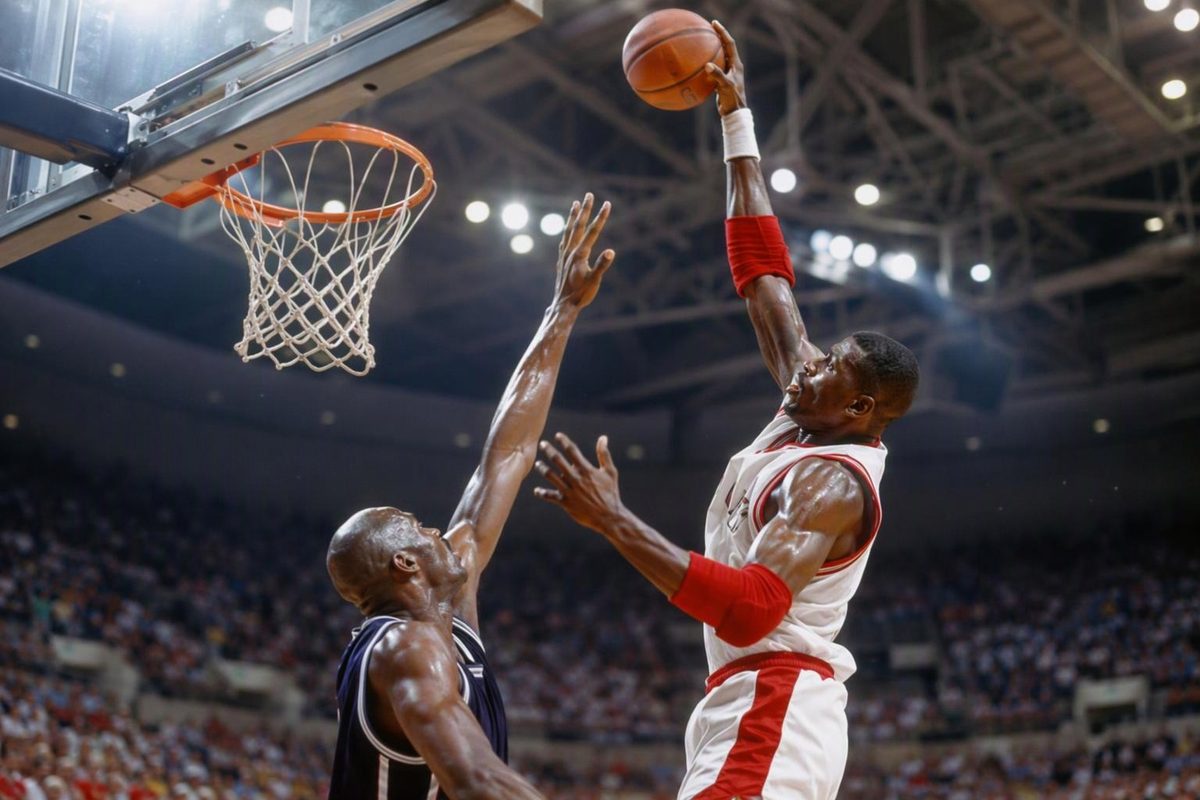
Hakeem Olajuwon has the most blocked shots in NBA regular-season history: 3,830. Dikembe Mutombo is second with 3,289, leaving Olajuwon a 541-block lead. These are regular-season totals—not regular season plus playoffs—on the NBA’s all-time blocks leaderboard, checked October 3, 2026.
A block, abbreviated BLK, occurs when a defender tips an opponent’s shot attempt and prevents it from scoring, according to the NBA statistical glossary. Career totals count those plays; they do not adjust for minutes, possessions or defensive role.
There is also a major historical boundary: the NBA began officially recording blocks in 1973–74. Wilt Chamberlain and Bill Russell played before that cutoff, so this is a ranking of officially recorded blocks—not a complete count of every shot rejected since the league began. The NBA explains the recording cutoff in its single-game blocks record summary and discusses Chamberlain and Russell’s missing statistics.
NBA career blocks leaders: Top 10
| Rank | Player | Regular-season blocks |
|---|---|---|
| 1 | Hakeem Olajuwon | 3,830 |
| 2 | Dikembe Mutombo | 3,289 |
| 3 | Kareem Abdul-Jabbar | 3,189 |
| 4 | Mark Eaton | 3,064 |
| 5 | Tim Duncan | 3,020 |
| 6 | David Robinson | 2,954 |
| 7 | Patrick Ewing | 2,894 |
| 8 | Shaquille O’Neal | 2,732 |
| 9 | Tree Rollins | 2,542 |
| 10 | Robert Parish | 2,361 |
Source: NBA all-time regular-season totals, as of October 3, 2026. ESPN’s historical leaderboard reports the same top 10 and totals.
Total blocks versus blocks per game
Olajuwon’s record reflects both shot-blocking frequency and a long career. He recorded 3,830 blocks in 1,238 regular-season games; Eaton recorded 3,064 in 875. Dividing their totals by games played gives 3.09 blocks per game for Olajuwon and 3.50 for Eaton, rounded to two decimals, using the NBA’s career data.
That comparison answers two different questions: Olajuwon accumulated more blocks, while Eaton blocked more shots per appearance. Neither calculation accounts for playing time or pace. More minutes and more opponent possessions create more opportunities, while a defender’s assignment affects which shots he can challenge.
Most blocks in one NBA game and one season
Single-game record: Elmore Smith, 17 blocks. Smith set the regular-season mark for the Los Angeles Lakers against Portland on October 28, 1973. He played all 48 minutes and added 12 points and 16 rebounds in a 111–98 win. The next-highest recorded total is 15, achieved twice by Manute Bol and once by Shaquille O’Neal, according to the NBA’s single-game record summary.
Single-season record: Mark Eaton, 456 blocks in 1984–85. The NBA identifies that season as its single-season blocks record. Eaton played all 82 games for Utah, producing 456 ÷ 82 = 5.56 blocks per game—displayed as 5.6 in his NBA season statistics.
Who holds the playoff blocks records?
Tim Duncan leads in career playoff blocks with 568. Kareem Abdul-Jabbar follows with 476, then Olajuwon with 472. Those figures belong to the separate NBA playoff leaderboard; Duncan’s 568 are not included in his 3,020 regular-season blocks.
Victor Wembanyama holds the single-game playoff record with 12 blocks, set against Minnesota on May 4, 2026, in Game 1 of the Western Conference semifinals. He surpassed the previous mark of 10 shared by Eaton, Olajuwon and Andrew Bynum. The NBA’s updated records page lists the performance, and its Game 1 report confirms the record. These playoff records are current as of October 3, 2026.
What the blocks leaderboard leaves out
A blocked shot is not automatically a finished defensive possession: the offense can recover the ball and shoot again. Nor does BLK count every useful contest, forced pass or drive abandoned because a rim protector is waiting.
Use blocks to measure recorded shot rejections, not to rank overall defense by themselves. For interpreting the shooting side of those plays, our guide to field goals and box-score shooting statistics explains FGM, FGA and FG%.